
The Science of Invisible Gallery Care
Standard commercial cleaning damages fine art. Conservation-grade protocols protect irreplaceable cultural assets.
Request a Gallery AssessmentWhy Standard Cleaning Fails Fine Art
Gallery directors who rely on conventional commercial cleaning face a silent but irreversible threat to their priceless inventory. Standard industrial protocols damage the very artworks they claim to protect.
The Invisible Threat: Dust and Chemicals
Most gallery directors assume that standard commercial cleaning—the same service used in office buildings and retail spaces—is sufficient for fine art preservation. This assumption is fundamentally dangerous. Standard cleaning methods introduce two primary threats to artwork: abrasive particulate matter and volatile chemical outgassing. Neither threat is immediately visible, but both cause irreversible degradation over months and years.
Dust as Abrasive Damage
Dust is not merely unsightly dirt. It is a complex mixture of silica particles, human skin cells, textile fibers, and microscopic organic matter. When dust settles onto the surface of an unvarnished oil painting or delicate watercolor, the silica crystals physically abrade the pigments. This abrasion is permanent—once pigment is removed, it cannot be replaced without expert conservation intervention.
Standard commercial vacuums and dry brooms make this problem worse. Cheap vacuum motors lack proper filtration, blowing fine particulate matter back into the gallery air where it recirculates and settles elsewhere. Dry brooms simply redistribute dust without capturing it.
Mold Growth and Moisture Damage
Organic dust—skin cells, textile fibers, and plant matter—absorbs moisture from the gallery air. When dust accumulates on canvas, it creates a micro-climate directly on the artwork's surface. This moisture-rich environment encourages the growth of destructive mold spores that feed on the organic material and eventually penetrate the paint layers themselves.
Once mold colonizes a canvas, it causes permanent staining, weakens the paint bond, and creates conditions for further biological degradation. Standard cleaning cannot reverse this damage.
The Chemical Crisis: VOCs and Varnish Degradation
Traditional industrial detergents contain volatile organic compounds (VOCs), ammonia, heavy artificial fragrances, and surfactants designed for industrial strength cleaning. When these chemicals are applied to gallery floors and surfaces, they evaporate into the enclosed gallery air. Over time, these gaseous compounds react chemically with the varnishes and pigments used in fine art.
The result: yellowing of varnish layers, cracking of paint surfaces, fading of pigments, and degradation of delicate glazes. A painting that appears fine after standard cleaning may show irreversible damage months or years later, when the chemical reactions have fully progressed.
Why Standard Cleaning Methods Fail
Standard Vacuums
Lack sealed HEPA filtration, recirculating fine dust back into the gallery air where it resettles on artwork. The motor vibration can also dislodge dust from surfaces before it is captured.
Dry Brooms and Dusters
Simply move dust from one location to another without capturing it. Synthetic broom bristles can generate static electricity that attracts dust, making the problem worse.
Industrial Detergents
Contain VOCs and harsh chemicals that outgas into gallery air and chemically react with varnishes and pigments, causing permanent yellowing and cracking.
The Conservation-Grade Solution
Protecting fine art requires abandoning standard commercial cleaning in favor of conservation-grade protocols that prioritize artwork preservation above all else.
HEPA Filtration and Static-Charged Microfiber
Sealed, triple-filtered HEPA vacuums capture 99.97% of particles 0.3 microns and larger, preventing recirculation. Static-charged microfiber cloths electrostatically attract and permanently hold dust without abrasive contact with paint surfaces.
VOC-Free, pH-Neutral Agents
Conservation-grade washing agents contain zero volatile organic compounds, zero ammonia, and zero artificial fragrances. pH-neutral formulations ensure no chemical reaction with varnishes or pigments. These agents leave no chemical footprint in the gallery air.
The difference between standard commercial cleaning and conservation-grade facility care is the difference between treating a gallery like an office building and treating it like the sacred space it is. Gallery directors who understand the science of art degradation cannot accept standard cleaning. The stakes are too high. The inventory is irreplaceable. The only responsible choice is conservation-grade protocols designed specifically to protect priceless cultural assets from dust, chemicals, and abrasive cleaning methods.
Conservation-Grade Protocols That Protect Priceless Inventory
SanMar Building Services specializes in conservation-grade facility management designed exclusively for high-end art galleries and auction houses. We understand that standard commercial cleaning damages fine art. Our protocols are built on three core pillars that protect irreplaceable cultural assets.
HEPA Filtration: Sealed, Triple-Filtered Dust Removal
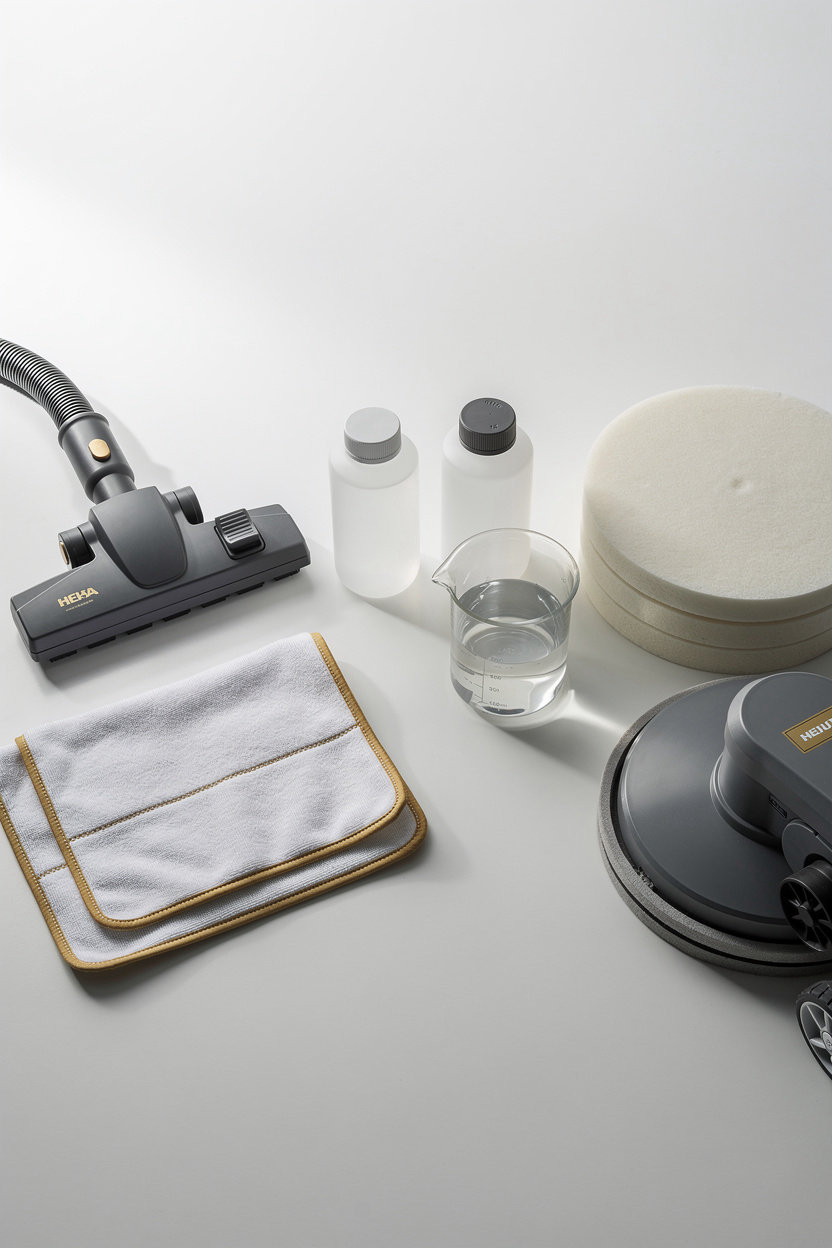
We deploy sealed, triple-filtered HEPA vacuums paired with static-charged microfiber cloths that capture airborne particulate matter completely. Unlike standard industrial vacuums that blow fine dust back into the gallery air, our equipment permanently removes silica, skin cells, and organic matter that would otherwise abrade delicate pigments or encourage destructive mold growth on canvas surfaces.
VOC-Free Sanitation: Zero Chemical Footprint
Traditional industrial detergents contain volatile organic compounds and harsh ammonia that outgas into enclosed gallery spaces. Over time, these gaseous chemicals react with varnishes and pigments, causing irreversible yellowing, cracking, and fading. We exclusively use pH-neutral, scent-free, conservation-grade washing agents that leave zero chemical residue in the air—protecting both artwork and the collectors viewing it.
Floor Restoration: Low-Speed Buffing with Non-Abrasive Pads
Exhibition openings leave scuffs, champagne spills, and street dirt across polished concrete and hardwood floors. We reset these surfaces overnight using low-speed buffing machines equipped with non-abrasive pads that lift damage without eating into protective sealants. The result is a flawless, glass-like finish ready for morning viewings.
After-Hours Service & Security Protocols
Our personnel undergo rigorous background vetting and receive specific training on spatial awareness around fragile sculptures and unframed canvases. They work under the constant watch of gallery security cameras, moving deliberately and with deep respect for the cultural and financial weight of the artifacts surrounding them. Discreet, vetted teams ensure no disruption to daytime exhibitions.
Every protocol is customized to your specific facility, operational constraints, and collection requirements. The invisible science of gallery preservation is what separates SanMar from standard commercial cleaners.
The Silent Language of Flawless Presentation
A clinically clean, perfectly ordered gallery communicates something far more powerful than mere aesthetics. It signals expertise, trustworthiness, and an unwavering commitment to the cultural assets within its walls.
Elevated Collector Confidence
High-net-worth collectors make acquisition decisions based on trust. A gallery that demonstrates meticulous facility management—flawless floors, dust-free surfaces, chemical-free air—communicates that the same precision extends to art handling, conservation, and long-term stewardship of their investment.
Protected Brand Reputation
In the competitive world of fine art, reputation is currency. A gallery known for pristine presentation, rigorous conservation standards, and impeccable facility management builds a brand that commands premium pricing and attracts serious collectors who value excellence above all else.
Protected Inventory Value
Priceless artworks deteriorate under dust, humidity, and chemical exposure. Meticulous facility management—HEPA filtration, VOC-free sanitation, climate control—directly protects the physical condition and market value of your collection over decades.
Maintenance as Brand Extension
The white-cube aesthetic is not accidental. It is a deliberate visual language that communicates cultural weight and curatorial authority. Every pristine floor, every dust-free surface, every perfectly controlled environment sends a message to collectors: this gallery understands what matters.
When facility maintenance is treated as an extension of art preservation—not merely janitorial housekeeping—the entire operation shifts. Personnel move with intention. Cleaning agents are selected for chemical safety, not convenience. Protocols are built around the artifacts, not around operational ease.
This precision ripples outward. Collectors notice. They feel it. They trust it. And they spend accordingly.
In the world of fine art, flawless facility management is not a luxury. It is the foundation upon which brand reputation, collector confidence, and inventory protection are built.
Featured: Dust Control & Art Preservation
Learn why standard commercial cleaning damages fine art—and how conservation-grade protocols protect irreplaceable cultural assets.
Preserving Priceless Art Through Strict Dust Control
The environment within a high-end art gallery or private auction house is designed to be entirely invisible. We construct stark white walls, lay down seamless polished concrete floors, and install highly controlled architectural lighting to ensure the absolute focus remains on the artwork. The space must feel sterile, perfect, and completely devoid of distraction. However, achieving this minimalist aesthetic while protecting millions of dollars of delicate inventory requires a level of facility management that borders on scientific preservation. We are not simply sweeping floors; we are actively managing the microscopic climate to prevent the physical degradation of oil canvases, delicate watercolours, and rare historical textiles. The maintenance protocols must be executed with extreme caution and deep chemical knowledge.
The most dangerous threat to fine art is the slow, silent accumulation of airborne dust. Dust is not merely unsightly dirt; it is a complex mixture of abrasive silica, human skin cells, and microscopic organic matter. When dust settles onto the surface of an unvarnished painting, it physically abrades the delicate pigments. Furthermore, organic dust absorbs moisture from the air, creating a micro-climate directly on the canvas that encourages the growth of destructive mould spores. We absolutely cannot allow standard maintenance crews to push dry brooms or use cheap vacuums that blow fine particulate matter back into the air. We must demand the exclusive use of sealed, triple-filtered HEPA vacuums and static-charged microfibre cloths that capture the dust completely, permanently removing it from the gallery environment.
The selection of chemical agents used within these exhibition spaces is a matter of strict preservation policy. Traditional industrial detergents contain volatile organic compounds, harsh ammonia, and heavy artificial fragrances. When these chemicals evaporate, they outgas into the enclosed gallery air. Over time, these gaseous chemicals react violently with the varnishes and delicate pigments used in fine art, causing the colours to yellow, crack, or fade irreversibly. A highly specialised program for NYC commercial cleaning in these environments mandates the absolute elimination of these toxic substances. We must exclusively use pH-neutral, scent-free, conservation-grade washing agents that leave zero chemical footprint in the air, protecting both the artwork and the high-net-worth collectors viewing it.
Ready to protect your gallery?
SanMar Building Services specializes in conservation-grade facility management for galleries and auction houses across New York. Learn how HEPA filtration, VOC-free protocols, and meticulous dust control protect your priceless inventory.
Email UsRequest Your Gallery Assessment
Tell us about your facility. We'll respond with a customized assessment and conservation-grade service proposal.
We respect your privacy. Your information is used only to respond to your inquiry.